.png)
Most affiliate programs start the same way: you open the doors, share a signup link, and let anyone who's interested join.
And honestly? That can work. Especially early on, when you're building momentum and want to make it as easy as possible for people to say yes. But as your program grows, you'll probably hit a point where you start wondering whether you should be more intentional about who's joining. Maybe you've noticed a handful of affiliates who signed up but never promoted. Maybe someone's messaging doesn't quite match your brand. Maybe you just want a better sense of who your partners are before they start representing you.
That's the moment most business owners face: should I keep my affiliate program open, or should I add an application process?
The answer isn't one or the other. It depends on who you're inviting and what your program needs right now.
This post breaks down the differences between open and application-based affiliate programs, when each approach makes sense, and how to use both at the same time. Course creators, coaches, and community builders all face this decision at some point, and the good news is you don't have to pick just one.
An open affiliate program lets anyone join without prior approval. Affiliates click a link, agree to the terms, and get access to their affiliate dashboard and links right away.
This is the simplest setup. There's no review step, no waiting period, and no extra work on your end for each new affiliate. It's the fastest way to get partners into your program and promoting.
Open programs work well when most of the people signing up already know you, your offer, or both. If your affiliates are coming from your existing customer base, your email list, or personal invitations, there's less need for a screening step because you already have context on who they are.
The tradeoff: you don't get a chance to learn about each affiliate before they start promoting. And if your signup link gets shared beyond your immediate network, you may end up with people in your program who aren't a great fit for your brand.
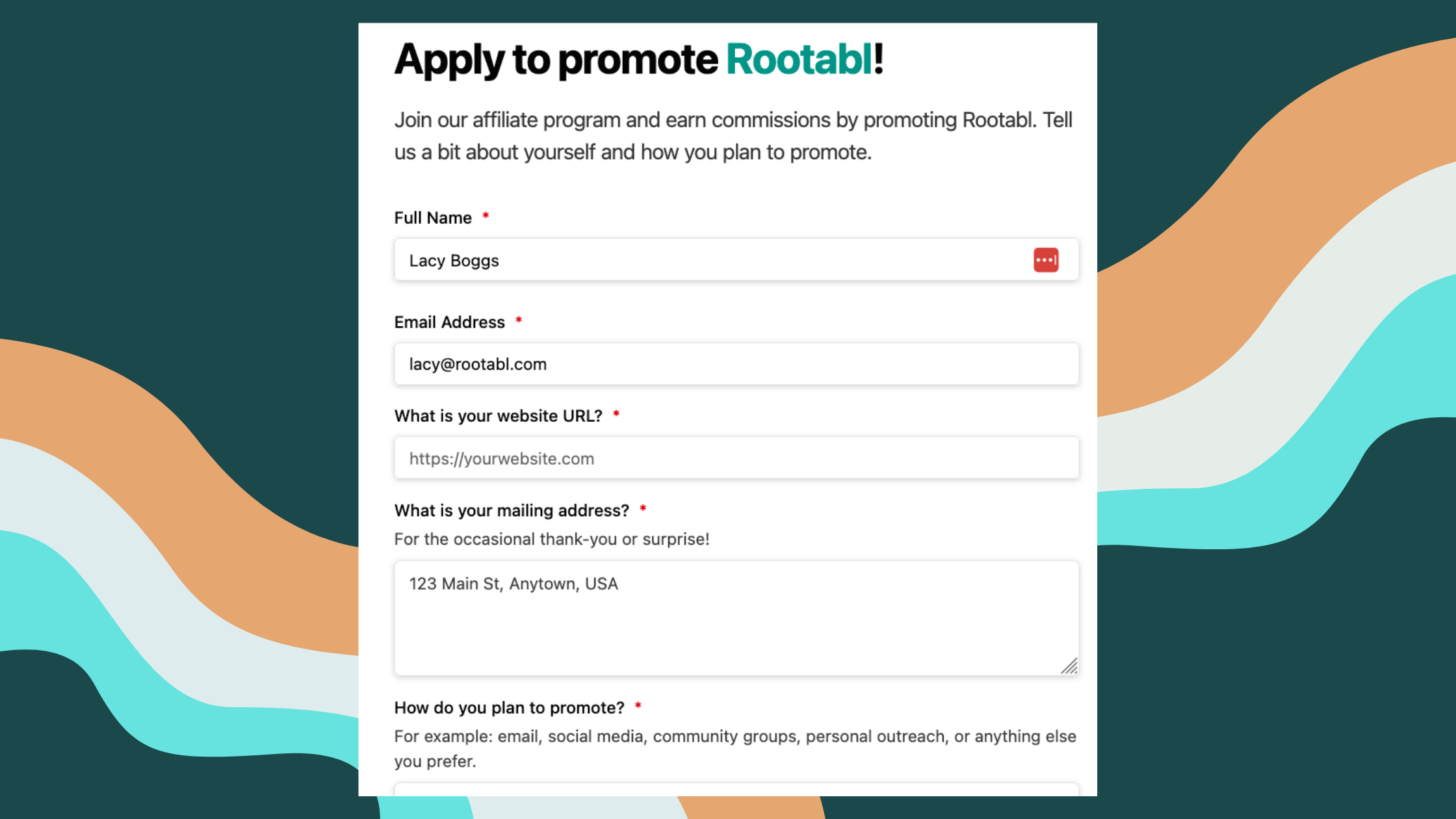
An application-based affiliate program adds a short form between signup and approval. Affiliates fill out a few questions, you review their answers, and then you approve or decline them before they get access.
This gives you more information upfront. You can learn how someone plans to promote, why they're interested, what their audience looks like, and whether they've worked as an affiliate before. That context helps you make better decisions about who represents your brand and lets you tailor your support to each affiliate from day one.
Application-based programs tend to attract more committed affiliates. The act of filling out an application signals genuine interest. People who aren't serious about promoting will often self-select out at this step, which means the partners who do join are more likely to follow through.
The tradeoff: there's a small amount of friction in the signup process, and you'll need to review and respond to applications in a timely way. If applications sit for a week without a response, you risk losing the momentum of affiliates who were ready to promote.
An open affiliate program works best when you already know and trust the people joining. Here's when to skip the application:
You're inviting past clients or students. These people have been through your program. They know what you sell, they've experienced the results, and they can promote authentically because they've lived it. An application would just add friction to a relationship that's already established.
You're personally recruiting people you know. If you've had a conversation with someone and you know they're a fit (a peer in your industry, a collaborator, a friend who serves the same audience), send them a direct link and let them in. The "application" already happened in your conversation.
You're in the early stages of your program. When you're just getting started, momentum matters. Making it easy for your first 10 or 20 affiliates to join helps you build a foundation fast. You can always add an application later as your program grows.
You're running a customer referral program. If every affiliate is an existing buyer, the purchase itself is a form of qualification. They already believe in the product enough to buy it.
An application process becomes more valuable when you have less existing context on the people joining. Here's when to use one:
You're recruiting affiliates publicly. If you're sharing your affiliate signup on social media, in blog posts, in podcast episodes, or in community groups, people you've never interacted with will apply. The application gives you a way to learn about them before they start promoting.
You want to match affiliates to specific campaigns. If you're running multiple offers, not every affiliate will be a good fit for every campaign. An application helps you understand what someone's audience looks like and which products or launches they'd be most effective promoting.
You need specific information for logistics. If you're sending physical promo materials or thank-you gifts to affiliates, you'll need a mailing address. Asking during the application is simpler than tracking it down later.
You've been burned by a completely open approach. Maybe you've had affiliates join who never promoted, used messaging that didn't align with your brand, or created confusion in your reporting. An application process helps you avoid repeating those experiences.
Yes. And for most programs, this is the best setup.
In Rootabl, every campaign gives you two affiliate signup links:
Instant join link for affiliates you already know are a fit. Past clients, personal connections, VIP partners. They click the link, agree to the terms, and they're in. No application needed.
Application link for open recruitment or affiliates you don't know well yet. Share this link publicly and let people apply. You review, then approve or decline from your dashboard.
Both links exist for every campaign, and you choose which one to share based on the situation. Send the instant join link to someone you just had a great conversation with. Post the application link in a community group or on social media.

This is per campaign, too. You might use applications for your flagship course launch (where you want tight alignment) and instant join for your evergreen referral program (where most affiliates are happy customers). Different campaigns, different approaches, all within the same account.
You're not choosing between "let everyone in" and "screen everyone." You're choosing the right method for each person, each campaign, based on how much context you already have.
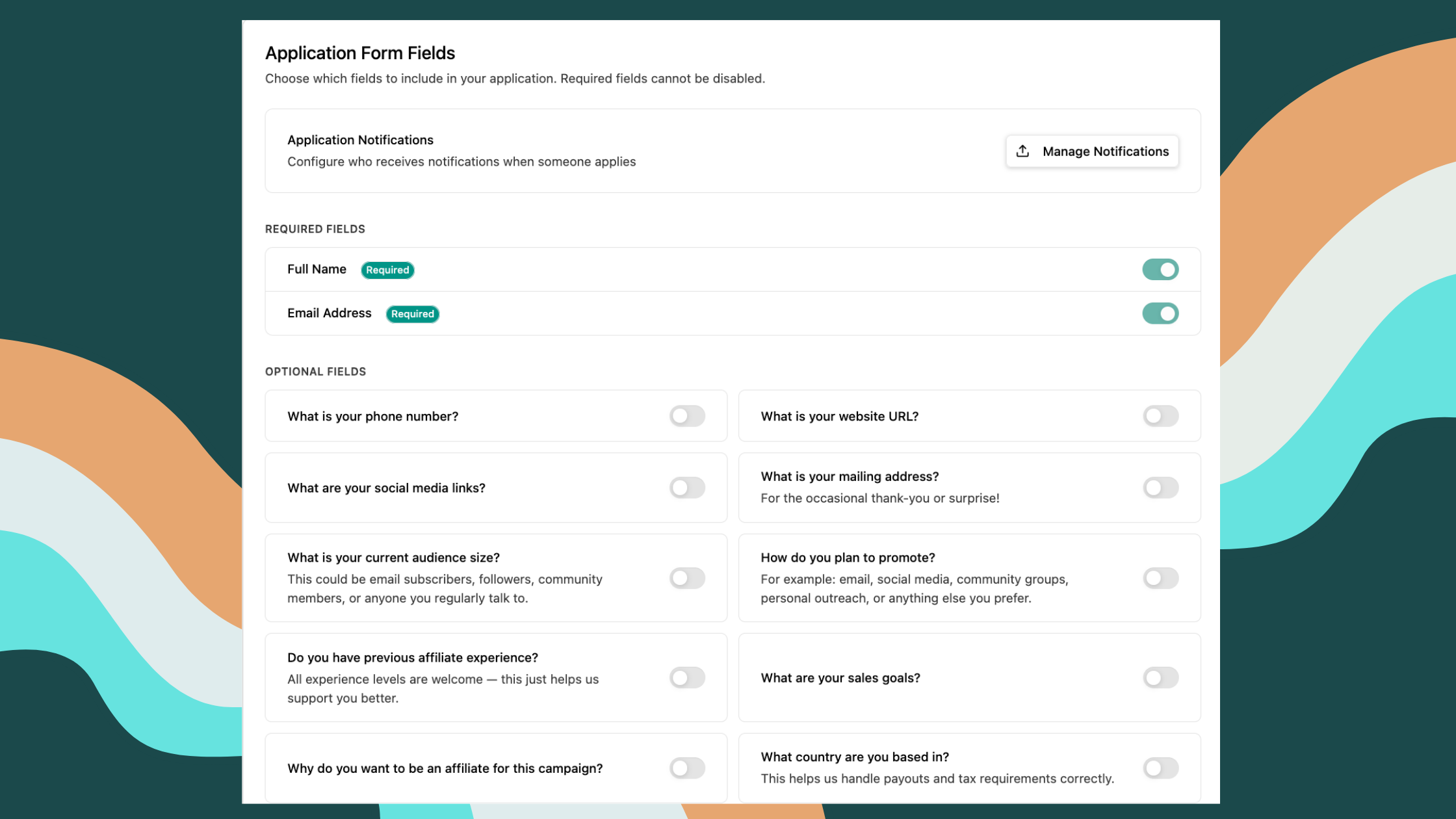
The best applications are short, relevant, and only include questions you'll actually use to make a decision.
In Rootabl, name and email are always collected. Everything else is optional, and you toggle on only the fields that matter for your program. The available fields were designed from years of running affiliate programs, so each one earns its spot:
High-signal questions (turn these on first):
Context questions (add based on your needs):
Logistics questions (add when you need the data):
You don't need to turn on every field. For a trusted audience, "How do you plan to promote?" and "Why do you want to be an affiliate?" might be all you need. For public recruitment where you're inviting people you don't know, adding more fields gives you a fuller picture.
The goal is just enough information to make a confident yes or no. Not so much that filling out the form feels like homework.
Speed matters here. If someone applies on Monday and hears back on Thursday, their excitement has cooled. Aim for same-day or next-day responses when possible.
A few things that help:
Keep your criteria simple. You don't need a scoring rubric. You're looking for alignment: Do they understand your offer? Do they have a plan? Would you want them representing your brand? For most applications, you'll know within 60 seconds.
Set up notifications. Rootabl sends you an email alert when a new application comes in. If you'd rather get a Slack ping or log it in a spreadsheet, connect Rootabl's Zapier integration to route notifications wherever works best for your workflow.
Batch if you need to. If you're getting a high volume of applications (which is a good problem), set aside 15 minutes once a day to review them rather than responding one at a time.
Respond to everyone. Even a decline deserves a response. Keep it simple: "Thanks for your interest. We're being selective about partners for this campaign and aren't able to approve your application right now." You can always invite them later if things change.
The Attract phase of the Cycle of Profitable Partnerships is about getting the right affiliates to say yes. Not just any affiliates. The right ones.
Your signup method is part of that. When you match the level of friction to the level of context you have, you make it easy for aligned partners to join and give yourself a natural filter for everyone else.
You're not building a wall. You're designing a door that opens the right way for each person walking through it.
And you can change your approach anytime, for any campaign. Toggle the application on when you're doing open recruitment. Keep it off for campaigns where you're only inviting people you know. Run one campaign with applications and another without. It's your call, and it can be different for every offer.
The application process isn't a permanent decision. It's a tool you use when it makes your program better.
This takes about two minutes:
Click here to see the full instructions.
When someone applies, you'll get a notification. Log in, review their answers, and approve or decline from your dashboard. Approved affiliates get an email letting them know they're in, and they can start promoting right away.
You can see all pending applications in one place and batch-approve if needed.
Won't an application process discourage people from joining?
Not the right people. If someone is genuinely interested in your offer and wants to promote it, a short form with a few questions isn't a barrier. It takes less than two minutes. The affiliates who are deterred by a simple application probably weren't going to promote anyway. And remember, you don't have to use the application for everyone. Send the instant join link to people you already know and trust. Use the application for everyone else.
What if I decline someone and they're upset?
You don't owe anyone access to your affiliate program. If someone doesn't align with your brand or doesn't have a clear plan, declining protects your program. Keep your response simple and professional: "Thanks for your interest. We're being selective about partners for this campaign and aren't able to approve your application right now." You can always reconsider later if things change.
Can I switch between an application and instant join?
Yes. Both links exist for every campaign in Rootabl. You choose which one to share based on the situation. You can share the instant join link with a trusted partner on Monday and post the application link in a Facebook group on Tuesday. Toggle the application on or off anytime as your needs change.
Do I need an application if all my affiliates are past customers?
Probably not. If everyone joining your program has already bought your product, they've self-qualified through the purchase. An instant join link keeps the process fast and frictionless. You can always add an application later if you start recruiting beyond your customer base.
What if I approve someone and they never promote?
That happens, even with an application process. People with good intentions don't always follow through. The application reduces this (affiliates with a clear plan are more likely to act on it), but it won't eliminate it entirely. An inactive affiliate isn't hurting your program by being there. And in Rootabl, you can always remove or disable an affiliate later if you need to.
How quickly should I respond to applications?
As fast as you can. Same-day or next-day is ideal. If someone applies on Monday and doesn't hear back until the following week, their enthusiasm has cooled. They've moved on. Set up email or Zapier notifications so applications don't sit unread.
Ready to set up your affiliate program with the flexibility to match your approach to your audience? Start your free trial and get your first campaign running in minutes.